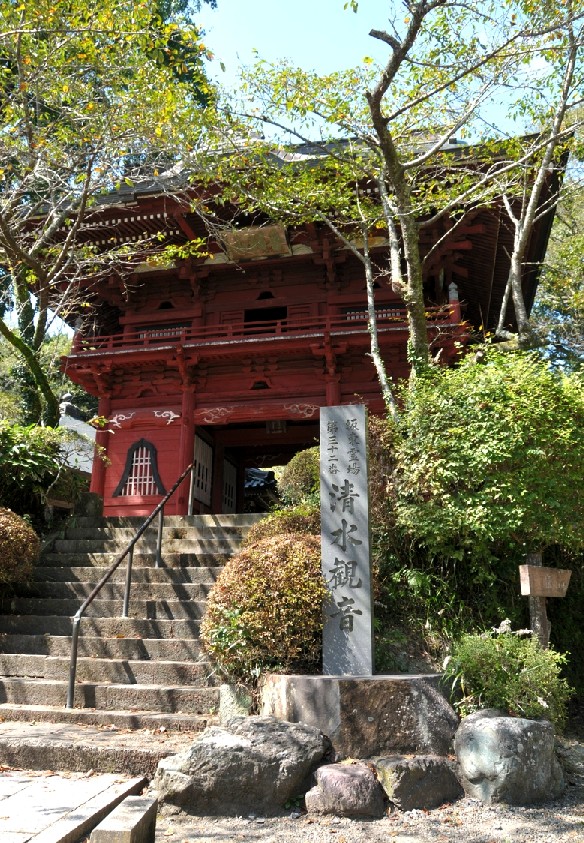
Overview
Kiyomizu-dera is a Tendai-sect Buddhist temple tucked into the rural hills of Kamone, Misaki-cho, in the city of Isumi, Chiba Prefecture. Its formal name is Otowa-yama Senju-in Seisui-ji, and it enshrines a statue of Senju Kannon Bosatsu, the thousand-armed Goddess of Mercy. Popularly known as the “Kiyomizu Kannon,” it remains a quiet place of prayer on the Sotobo coast and continues to welcome pilgrims traveling the Bando Sanjusankasho route.
Highlights
- ●The Senju Kannon honzon, revered as the 32nd stop of the Bando Sanjusankasho
- ●A temple history said to date back to its founding in 807
- ●A serene precinct cradled by the wooded hills of the Sotobo coast
- ●A shared connection with Kyoto's Kiyomizu-dera through the “Kiyomizu Kannon” name
History
According to temple tradition the site was founded in 807, during the early Heian period, giving it a history that spans more than a thousand years. Its principal image, the Senju (thousand-armed) Kannon, has long drawn devotion as the 32nd stop on the Bando Sanjusankasho pilgrimage of thirty-three Kannon temples. The sacred mantra of the honzon and the pilgrim's verse handed down here express the enduring spirit of prayer that has shaped the temple over the centuries.
Access
The temple lies inland on the Sotobo side of Chiba Prefecture, in Kamone, Misaki-cho, Isumi (around 35.29°N, 140.36°E). From the nearest station on the JR Sotobo Line, a taxi or local bus is the most practical option, while drivers can reach the area via nearby expressways and national routes. As the setting is surrounded by wooded hills, public transport is limited, so it is wise to check timetables and directions with official sources before your visit.
Best season
Every season has its own charm, but the fresh greenery of spring and early summer, and the coloured leaves of autumn, are especially beautiful here. To savour the calm atmosphere of a Bando pilgrimage temple, a weekday morning with few visitors is ideal.
Map
35.2901, 140.3560 · Wikidata
Suggested itinerary
- 1Pass through the temple gate and settle your mind along the hill-lined approach
- 2Pray at the main hall and reflect on the pilgrim's verse before the Senju Kannon
- 3Stroll slowly through the grounds and take in the quiet air of a pilgrimage temple
- 4Round off the trip by exploring the nearby nature and historic sites of the Sotobo area
Did you know?
💡 The nickname “Kiyomizu Kannon” comes from the fact that, like the famous Kiyomizu-dera in Kyoto, this temple enshrines a thousand-armed Kannon. The word for the water vessel offered before the Buddha, which appears in the temple's traditional pilgrim verse, echoes the meaning of Kiyomizu, or “pure water,” at the heart of the temple's name.
Nearby spots
Traveler reviews0
No reviews yet. Be the first to share!